
Indica, Sativa, Ruderalis and Hybrid Cannabis: What These Genetic Classifications Mean
Introduction
Indica, sativa and hybrid are among the most familiar terms in cannabis. They appear on product labels and in everyday conversation as though each describes a distinct plant type with predictable characteristics or effects.
The biology is less clear-cut. These labels can give a rough indication of ancestry or physical traits, but they are not precise genetic tests and cannot reliably predict how a product will affect an individual. Understanding indica and sativa differences means distinguishing traditional classifications from modern breeding and the plant’s chemistry.
Understanding the classifications
Cannabis taxonomy has long been debated. Botanists and researchers differ on whether cannabis is one highly variable species or should be divided into multiple species or subspecies. Indica, sativa and ruderalis feature in this debate, but commercial use of the terms does not follow a single scientific standard. This wider context is important when considering indica and sativa differences.
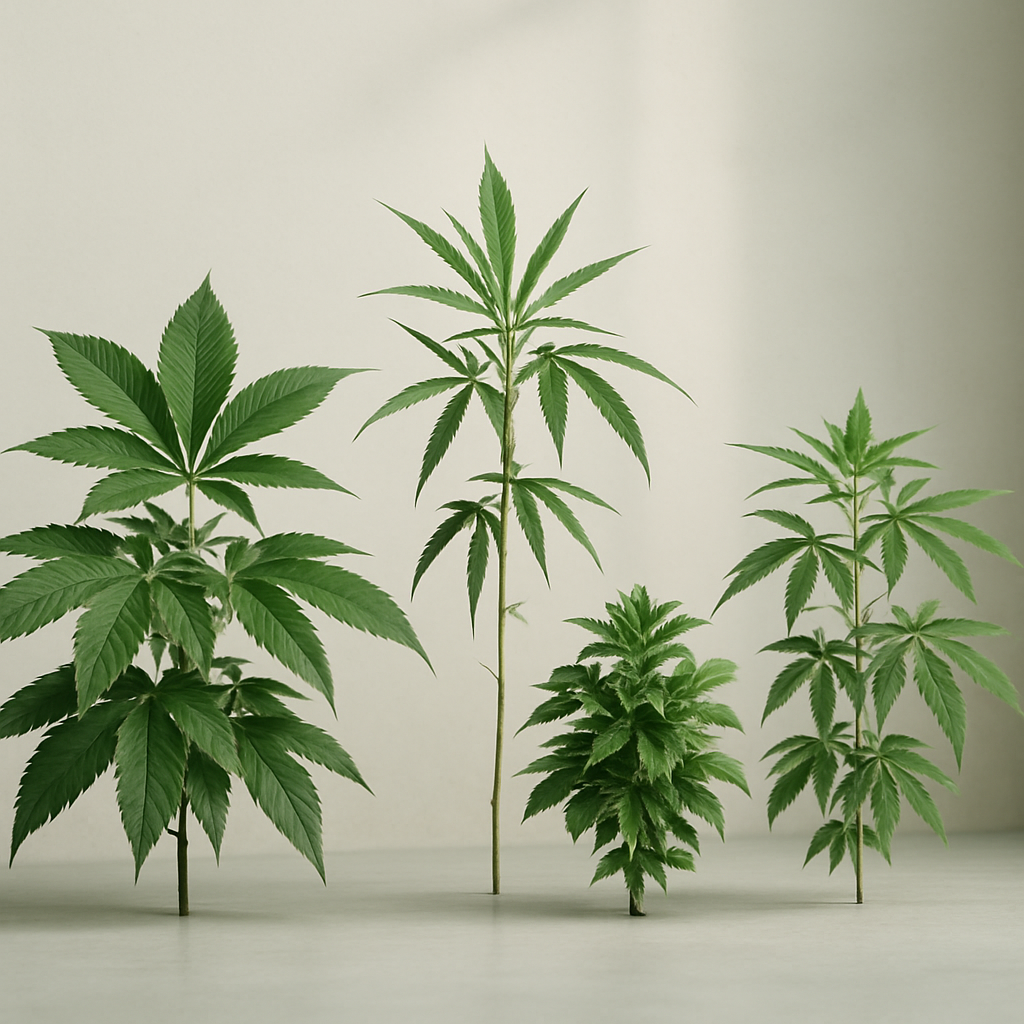
Sativa is commonly associated with taller plants and narrower leaflets, while indica is often used to describe shorter, bushier plants with broader leaves. These are general tendencies, not definitive rules. A plant’s shape depends on its genetic background and growing conditions, and appearance alone cannot reveal its chemical profile. These visible traits are often cited in discussions of indica and sativa differences, but they are not reliable identifiers.
Ruderalis is generally described as a group of cannabis plants adapted to short growing seasons and changing environmental conditions. It is often discussed in modern breeding because of autoflowering: plants with this inherited trait can flower according to age, rather than in response to seasonal changes in daylight. Autoflowering genetics describe this flowering trait, rather than a simple contrast in indica and sativa differences.
Ruderalis genetics can help describe a plant’s ancestry, but they do not guarantee a particular potency, aroma or experience. Nor does the label mean that a modern variety is an untouched example of a wild population. Breeders have crossed plants and selected traits over many generations.
Hybrid describes this mixing. In practice, the term usually refers to a variety with ancestry from plants described or marketed as indica and sativa, sometimes with ruderalis in its lineage. Cannabis hybrid classification points to breeding history, but often reveals little about the precise mix of ancestry or the traits of the finished product. This is one reason indica and sativa differences can be difficult to define.
Indica and sativa are best treated as starting points, not definitive categories. The labels can offer useful shorthand for lineage and physical traits, but decades of crossbreeding have blurred the boundaries. A product sold under one label may share much of its ancestry and many of its characteristics with another, complicating claims about indica and sativa differences.
Key factors
Genetics are only part of the picture. A plant’s chemical composition, including its cannabinoids and aromatic compounds, can vary within a named variety. A familiar label cannot replace reliable information about what a specific sample contains, and chemistry may matter more than perceived indica and sativa differences.
Growing conditions and post-harvest handling also affect the plant material that reaches consumers. Light, temperature, nutrition, harvest timing, drying and storage can influence how the plant develops and which qualities are preserved. A product label does not show how these factors were managed.
Photoperiod cannabis offers a useful contrast with autoflowering types. Photoperiod plants typically flower in response to changes in the length of light and darkness. Autoflowering plants are less dependent on this seasonal signal. These terms describe a growth trait, not a measure of quality or strength, and are separate from most discussions of indica and sativa differences.
Modern naming adds further uncertainty. Different producers may use the same strain name for plants that are not genetically identical, while related plants may be sold under different names. UK cannabis strains named in consumer settings do not form a uniform scientific catalogue; naming practices and available genetic information vary. This makes comparisons based on indica and sativa differences even less certain.
As a result, the certainty of the language often exceeds what the evidence can support. Indica and sativa are commonly presented as opposites, but a label alone cannot account for a plant’s genetics, chemical composition, growing conditions or an individual’s response. Treating it as a complete forecast gives the category more precision than it has, regardless of claimed indica and sativa differences.
How to interpret a label
Think of indica, sativa and ruderalis as broad descriptions of a complex history. Hybrids are combinations created when breeders bring different lineages together. This helps explain why a single label cannot describe every quality of a plant or settle questions about indica and sativa differences.
When assessing a named variety, ask what is actually known: Is its lineage documented? Is there credible information about its chemical composition? Is the name used consistently, and is the source clear about how the product was characterised? Without these details, the label remains a rough description, not a prediction. Reliable evidence is more useful than generalisations about indica and sativa differences.
A label can point you towards useful questions, but it cannot determine what a plant contains or how someone will respond to it. This distinction matters when familiar shorthand is used to suggest certainty, including certainty about indica and sativa differences.
Conclusion
Indica, sativa, ruderalis and hybrid all have a place in discussions of cannabis, but they refer to different, sometimes overlapping ideas: historical classification, visible traits, breeding ancestry and flowering behaviour. Their meaning depends on context, and commercial usage may not match a strict botanical definition.
Use these labels as broad clues, not guarantees. Distinguish ancestry from chemistry and growth traits, and remember that indica and sativa do not reliably predict a product’s effects. In a plant shaped by complex genetics and varied growing conditions, the category is only one part of the story. A careful view of indica and sativa differences starts with recognising the limits of the labels.